Schedule a Consultation
a more confident version of you
Contact Us


Facial aging is rarely a one-dimensional problem. Skin laxity, volume loss, and structural shifts usually happen together. Yet many patients find themselves shuffling between a standalone med spa for injectables and a separate surgeon’s office for procedure discussions. When care is fragmented like this, it’s easy to end up with mismatched or overdone results.
True facial rejuvenation requires a single, cohesive master plan. As a double board-certified facial plastic surgeon in NYC, Dr. Lee Ann M. Klausner brings a level of anatomical precision to non-surgical treatments that only a surgeon possesses—and a nuanced understanding of how today’s quick fixes impact tomorrow’s surgical outcomes. Known throughout the region for tackling the most complex reconstructive cases, Dr. Klausner provides a continuous, staged approach to facial care so you never have to guess what your next step should be.
Surgical facial care refers to procedures performed in an operating room that physically reposition, remove, or reconstruct tissue, such as a facelift or rhinoplasty. Non-surgical care refers to injectable, energy-based, or topical treatments that refine appearance without incisions, such as BOTOX or Sofwave.
Both categories share the same goal of natural-looking rejuvenation, but they differ in a few key ways:
|
Category |
Example Procedures |
Typical Downtime |
Result Duration |
|
Surgical |
Facelift, Rhinoplasty, Blepharoplasty, Chin Augmentation |
1 to 3 weeks |
Years to permanent |
|
Non-Surgical |
BOTOX, Dysport, Sofwave, Morpheus8 |
None to a few days |
Several months to 2 years |
Combining surgical and non-surgical modalities allows a facial plastic surgeon to build a staged treatment plan that evolves with a patient's goals rather than forcing an all-or-nothing decision. A patient considering rhinoplasty, for example, may first try nonsurgical rhinoplasty with filler to preview a subtle change before committing to surgery.
Similarly, a patient who undergoes a facelift can maintain and extend those results over time with periodic injectables or skin tightening treatments like Sofwave, rather than needing a second surgery years later.
Board certification matters most when one surgeon is overseeing both surgical and non-surgical treatment, because it confirms that the surgeon has been rigorously tested in both operative and non-operative facial anatomy. Dr. Klausner holds dual board certification from the American Board of Facial Plastic and Reconstructive Surgery and the American Board of Otolaryngology-Head and Neck Surgery.
Board certification requires a surgeon to meet demanding educational, training, and safety standards and exists specifically to protect patients and ensure optimal outcomes.
For a patient combining surgical and non-surgical care, dual certification confirms a few specific things about the surgeon managing that plan:
A surgeon who is trained only in injectables or only in surgery cannot offer the same continuity of judgment across both. Dr. Klausner's dual certification, along with her fellowship in facial plastic and reconstructive surgery, means every non-surgical recommendation is made with full knowledge of how it may affect a future surgical outcome, and vice versa.
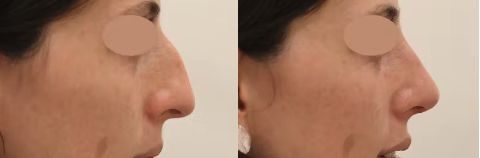
*Real Patient Results - Rhinoplasty by Dr. Klausner
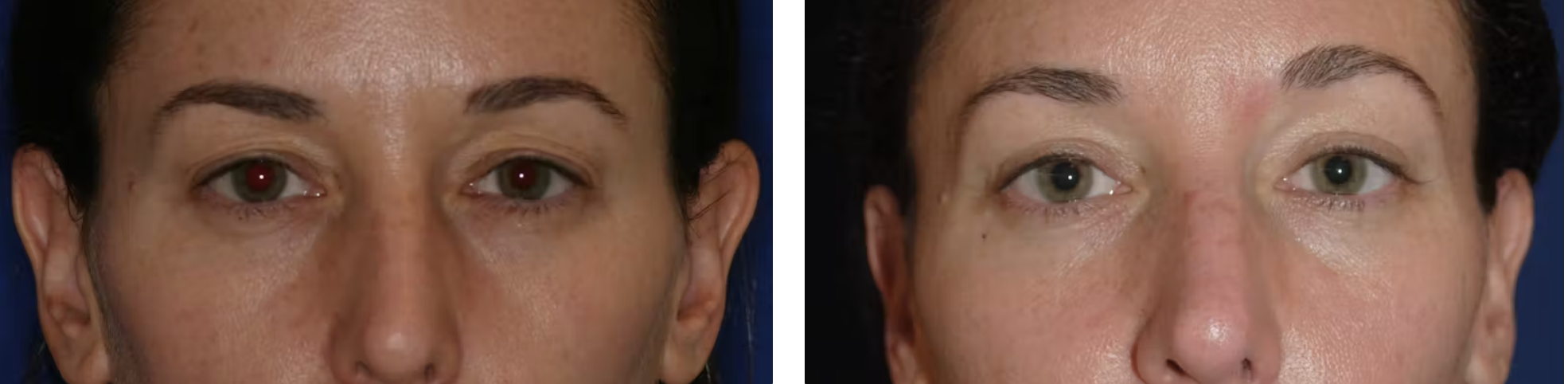
*Real Patient Results - Eyelid Surgery by Dr. Klausner
A consultation at Klausner Institute begins with a conversation about the patient's specific concerns and goals, followed by a physical exam of facial structure, skin quality, and symmetry. Dr. Klausner then walks through both surgical and non-surgical options relevant to those concerns, explaining the tradeoffs of each.
From there, patients receive a personalized plan that may combine modalities in stages. A typical consultation and planning process at Klausner Institute includes:
Many patients hesitate to pursue combined care because they assume it means more cost, more downtime, or a more dramatic change than they want. In practice, staged care is often designed to do the opposite. We’re often asked:
Facial plastic surgery has trended toward a blend of surgical and non-surgical care rather than either one. Nonsurgical treatments make up roughly 80 percent of procedures reported by AAFPRS members, while rhinoplasty, facelifts, and blepharoplasty remain the leading surgical procedures. This pattern reflects patients using non-surgical treatments both on their own and to complement surgical results, rather than treating the two as competing choices.
What are the benefits of seeing a facial plastic surgeon for both surgical and non-surgical care?
Patients get one consistent point of judgment across all their facial treatments, which helps prevent mismatched results and allows a plan to evolve in stages rather than requiring a single, permanent decision.
Is it safe to combine surgical and non-surgical facial treatments?
When both are overseen by a board-certified facial plastic surgeon, combining treatments is generally considered safe, since the surgeon can sequence procedures appropriately and account for how each may affect healing or results.
Can non-surgical treatments replace surgery entirely?
Non-surgical treatments can address surface-level concerns like fine lines and mild volume loss, but they cannot correct structural issues, such as excess skin or nasal shape, the way surgery can.
How do I know which approach is right for me?
A consultation with a board-certified facial plastic surgeon, such as Dr. Klausner, is the best way to determine whether surgical, non-surgical, or a staged combination of both fits your goals.
Dr. Klausner brings a rare combination of credentials to combined care: dual board certification, a fellowship of the American College of Surgeons, and specialized fellowship training under renowned facial plastic surgeon Dr. Russell W.H. Kridel. She has been named to Castle Connolly's Top Doctors list and New Beauty's Top Beauty Doctors, and was featured in New York Magazine's Top Doctors section.
Because Dr. Klausner performs both the surgical and non-surgical procedures herself, patients at Klausner Institute avoid the disconnect that comes from splitting care between multiple providers. The practice serves patients throughout New York City, the Upper East Side, Westchester, NY, and Greenwich, CT, offering the same level of surgical and non-surgical expertise across the region.
Schedule a consultation with the Klausner Institute today to discuss your surgical and non-surgical options.
Disclaimer: This information is provided for educational purposes only and does not replace a consultation with a board-certified facial plastic surgeon. Outcomes, risks, and suitability vary from patient to patient.