Schedule a Consultation
a more confident version of you
Contact Us

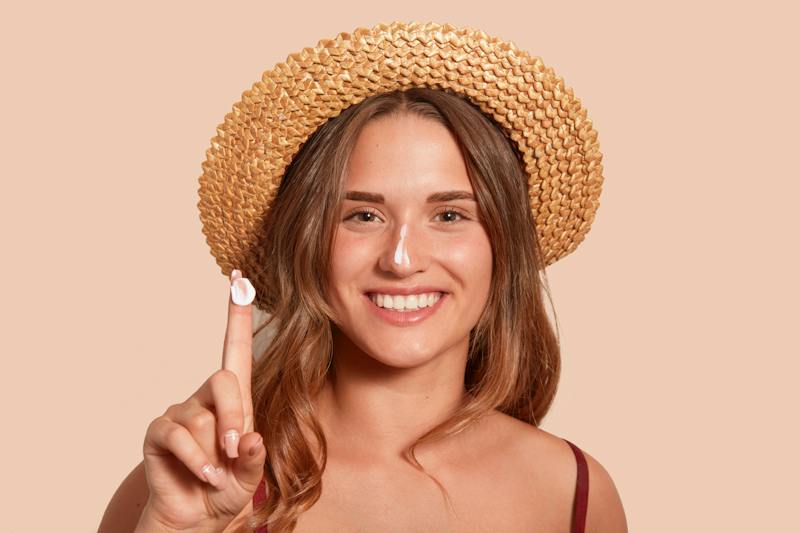
Healing rhinoplasty skin is more sun-sensitive than skin that has never been operated on, which is why SPF 50+ is a non-negotiable part of recovery rather than a nice-to-have. Skipping sunscreen during the months after surgery can lead to permanent discoloration, prolonged swelling, and more visible scarring, exactly where a patient wants the least attention drawn.
Dr. Lee Ann M. Klausner built her NYC practice around the kind of complex and revision rhinoplasty cases other surgeons turn away, and protecting a nose through the healing process is part of how those results are protected long term. Dr. Klausner is double board-certified by the American Board of Facial Plastic and Reconstructive Surgery and the American Board of Otolaryngology-Head and Neck Surgery, and she walks every rhinoplasty patient through exactly why sun protection belongs at the top of the aftercare list.
This blog breaks down why healing nasal skin reacts so strongly to UV exposure, why SPF 50+ specifically matters, and which skincare products support the skin while it recovers.
Rhinoplasty skin is more reactive to UV light than undamaged skin because the surgery itself disrupts the tissue's normal defenses. Swelling, altered blood flow, and (in open rhinoplasty) an incision across the columella all leave the nose in an inflamed state for weeks to months, and inflamed skin pigments differently than calm skin.
A few reasons the nose stays sun-sensitive well past the initial bruising phase
Unprotected sun exposure during rhinoplasty recovery can permanently darken healing skin, prolong swelling, and make scars more noticeable. Cleveland Clinic lists skin discoloration among the recognized complications that can follow rhinoplasty surgery, and it is one of the more preventable ones.
Unprotected UV exposure during recovery can lead to:
Put simply, sun exposure does not just risk an uneven tan line. It can extend the timeline before a patient sees their final result and leave pigment changes that take months or longer to fade.
SPF 50+ gives rhinoplasty patients a wider margin for error than SPF 30 during a period when the skin can least afford a lapse in protection. According to the American Academy of Dermatology, an SPF of at least 30 blocks roughly 97% of UVB rays, while higher SPFs block only slightly more.
A few reasons that margin matters more during rhinoplasty recovery than it does day to day:
The right skincare routine during rhinoplasty recovery supports the skin barrier while SPF handles UV protection, rather than adding irritation on top of healing tissue. At the Klausner Institute, Dr. Klausner curates skincare regimens from Jan Marini, Obagi, and DefenAge, tailoring each regimen to each patient's skin type and stage of healing.
Here’s why:
Dr. Klausner determines which products and timing are appropriate for each patient during follow-up visits, since applying certain actives too early in recovery can do more harm than good. Patients can review the practice's full skincare offerings to see the systems available once cleared for use.
Most rhinoplasty patients see the bulk of their swelling resolve within four to six weeks, with continued refinement over the following months. Cleveland Clinic notes that swelling gradually decreases after about three months. However, the nose can still be settling into its final shape between three months and a year after surgery, with full results typically visible once healing completes around the one-year mark.
Sun sensitivity tends to track that same timeline:
Protecting a rhinoplasty result does not stop when the swelling goes down. It continues whenever a patient steps outside, which is why SPF 50+ remains part of the routine long after the visible healing phase ends. Dr. Klausner draws on her dual board certification and reputation for handling complex and revision rhinoplasty cases to give every patient a clear, personalized recovery plan, including sun protection. Patients in NYC, Westchester, and Greenwich who want the same level of guidance during their rhinoplasty recovery can schedule a consultation with the Klausner Institute to get started.
This information is provided for educational purposes only and does not replace a consultation with a board-certified plastic surgeon. Outcomes, risks, and suitability vary from patient to patient.
American Academy of Dermatology, Sunscreen FAQs
Cleveland Clinic, Rhinoplasty
American Society of Plastic Surgeons, Fun in the Sun: Protecting Your Plastic Surgery Scars
PubMed, Ultraviolet Exposure Influences Laser-Induced Wounds, Scars, and Hyperpigmentation
Dove Press, Post-Inflammatory Hyperpigmentation in Dark Skin